Background: Heart failure (HF) is a growing public health burden, particularly among elderly patients, in whom reduced left ventricular ejection fraction (HFrEF) is associated with worse outcomes. Data on factors associated with HF with reduced Left Ventricle Ejection Fraction (LVEF) in sub-Saharan Africa are limited. This study aimed to identify factors associated with HF with LVEF < 50% among elderly patients in two teaching hospitals in Cameroon. Methods: We conducted a retrospective cross-sectional study supplemented with prospective data collection from November 2021 to April 2022 in the cardiology units of Yaoundé Central Hospital and Yaoundé General Hospital. Patients aged ≥65 years with HF were included. Data on demographics, comorbidities, geriatric syndromes, echocardiographic parameters, and cardiovascular risk factors were collected. Univariate logistic regression was performed to identify factors associated with LVEF < 50%; multivariate analysis was not reliable due to sparse data. Our variables were statistically significant for p-values <0.05. Results: A total of 63 patients were included (mean age 75.0 ± 6.4 years; 66.7% female). Hypertension was the most common comorbidity (81.0%), and frailty was present in 42.9%. On univariate analysis, tachycardia (OR 7.1; 95% CI 1.9–25.8), cardiac conduction blocks (OR 3.7; 95% CI 1.2–11.3), and eccentric left ventricular hypertrophy (OR 7.0; 95% CI 2.3–21.5) were significantly associated with LVEF < 50%, whereas normal heart rate, concentric LVH, decreased inferior vena cava compliance, and diastolic dysfunction appeared protective. Multivariable analysis could not be reliably performed due to sparse data.
This is an Open Access article, distributed under the terms of the Creative Commons Attribution 4.0 International License (http://creativecommons.org/licenses/by/4.0/), which permits unrestricted use, distribution and reproduction in any medium or format, provided the original work is properly cited.
Heart failure with preserved ejection fraction (HFpEF) represents the most frequent phenotype amongst elderly patients with 48% of HF cases in elderly patients 65 to 84 years being HFpEF; rising to 61% from 85years
[4]
Bouchard JL, Aurigemma GP, Goldberg RJ, Fournier JB, Vinch CS, Hill JC, et al. Heart Failure in the “Oldest Old”: Clinical and Echocardiographic insights. The American Journal of Geriatric Cardiology. 2007 Jul 1; 16(4): 236–42.
[4]
. This is explained by the fact that advancing age is associated with ventricular stiffening and a higher prevalence of comorbidities like hypertension, obesity and atrial fibrillation which are all associated with diastolic dysfunction.
Even though HFpEF makes up the majority of cases of HF in patients aged ≥65 years, HFrEF is associated with higher cardiovascular mortality compared with preserved LVEF (HFpEF), highlighting those elderly patients with LVEF <50% constitute a higher-risk group warranting focused study
[5]
Desai RJ, Mahesri M, Chin K, Levin R, Lahoz R, Studer R, et al. Epidemiologic Characterization of Heart Failure with Reduced or Preserved Ejection Fraction Populations Identified Using Medicare Claims. The American Journal of Medicine. 2020 Oct 27; 134(4): e241–51.
This current study aims to determine the factors associated with HF with a LVEF<50% amongst elderly patients in two teaching hospitals in Cameroon.
2. Methods
Study design and setting: We carried out a retrospective cross-sectional study supplemented by prospective data collection from November 2021 to April 2022 in the cardiology units of the Yaoundé Central Hospital and the Yaoundé General Hospital; Cameroon.
Study population: Patients aged ≥65 years with HF were included. The diagnosis of HF was based on symptoms and signs supported by echocardiographic findings.
Data collection: Data was extracted from medical records and supplemented with prospective interviews. Variables included: sociodemographic characteristics, cardiovascular risk factors, comorbidities, geriatric syndromes (according to the ICOPE, MNA-SF and Rockwood questionnaires), and paraclinical investigations.
Statistical analysis: Data was entered and analysed using SPSS version 23.0. Continuous variables were expressed as mean ± standard deviation and categorical variables as frequencies and percentages. Multivariable logistic regression was performed to identify independent predictors of HFrEF. Variables with p<0.10 on univariate analysis were included in the multivariate model. Statistical significance was set at p<0.05.
Ethical considerations: Ethical clearance was obtained from the Institutional Ethics Committee of the Faculty of Medicine and Biomedical Sciences; University of Yaoundé I. Administrative authorization was granted by the two hospitals. Confidentiality was maintained.
3. Results
Sociodemographic characteristics and comorbidities
A total of 63 patients were included, corresponding to a hospital prevalence of 34.5% (CI: 28.9 – 40.2). The mean age was 75.0 ± 6.4 years. The age group 70–79 years was most represented. There was a female predominance, with a sex ratio (M/F) of 0.5 (Table 1).
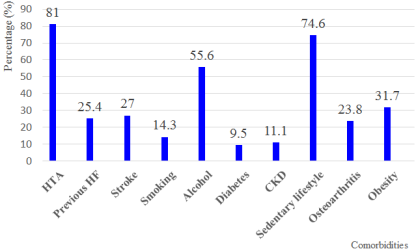
Hypertension was present in 81.0% of patients being the most common comorbidity followed by a sedentary lifestyle in 74.6% (Figure 1).
Figure 1. Comorbidities and Cardiovascular risk factors.Comorbidities and Cardiovascular risk factors.
Table 1. Sociodemographic characteristics of study Population.Sociodemographic characteristics of study Population.Sociodemographic characteristics of study Population.
Sociodemographic Characteristics
Total
Percentages (%)
Age Ranges
[65-75[
32
50.8
[75-85[
24
38.1
≥85
7
11.1
Sex
Male
21
33.3
Female
42
66.7
Educational Level
No formal education
19
30.2
Primary
26
41.3
Secondary
13
20.6
Higher
5
7.9
Employment status
Active service
18
28.6
Retired
45
71.4
Marital Status
Single
11
17.5
Married
28
44.4
Divorced
18
28.6
Widow/widower
6
9.5
Geriatric syndromes
Overall, the most common finding was a decline in intrinsic capacity on comprehensive geriatric evaluation with 41 patients (65.1%) recorded as having a decreased intrinsic capacity. Intrinsic Capacity, defined by the World Health Organization (WHO), is the sum of an individual's physical and mental capabilities (like walking, thinking, seeing, hearing, remembering) that they can use at any given time, forming a holistic measure for healthy aging, distinct from disease focus. Frailty was present in 27 patients (42.9%). Both decrease intrinsic capacity and frailty were present in 100% of patients aged 85 years and above. WHO defines frailty as an increased vulnerability to health problems, making older individuals less able to cope with daily stresses or acute illnesses like infections, leading to functional decline, falls, and higher mortality. Cognitive impairment was identified in 14 (22.2%), depressive symptoms in 23 (36.5%), malnutrition in 9 (14.3%), and social dependence in 19 (30.2%). Polypharmacy was documented in 15 patients representing 23.8% of our study population (Table 2).
Table 2. Distribution of geriatric syndromes in Study Population.Distribution of geriatric syndromes in Study Population.Distribution of geriatric syndromes in Study Population.
Geriatric Syndrome
Study Population N=63
Age Range
[65-75] n=32
[75-85] n=24
≥85 n=7
Decline in Intrinsic capacity
41 (65.1)
14 (43.7)
20 (83.3)
7 (100)
Frailty
27 (42.9)
13 (40.6)
19 (79.2)
7 (100)
Depression
23 (36.5)
8 (25)
13 (54.2)
2 (28.6)
Dependence
19 (30.2)
5 (15.6)
9 (37.5)
5 (71.4)
Cognitive Impairment
14 (22.2)
1 (3.2)
7 (29.2)
5 (71.4)
Polypharmacy
15 (23.8)
3 (9.4)
7 (29.2)
5 (71.4)
Malnutrition
9 (14.3)
3 (9.4)
2 (8.3)
4 (57.1)
Factors Associated with Heart Failure with a LVEF<50%
In our study, we found that tachycardia, cardiac conduction blocks and eccentric left ventricular hypertrophy significantly increased the odds of HF with a reduced LVEF while a normal heart rate, concentric left ventricular hypertrophy, decreased inferior vena cava compliance and diastolic dysfunction appeared to have a protective effect (Table 3).
Multivariate logistics regression could not be reliably performed due to sparse data and complete separation in some covariates.
Table 3. Factors associated with LVEF<50% on Univariate analysis.Factors associated with LVEF<50% on Univariate analysis.Factors associated with LVEF<50% on Univariate analysis.
Variable
LVEF
OR (CI: 95%)
p-value
<50%
≥50%
Bradycardia (HR<60bpm)
4 (50%)
4 (50%)
1.5 (0.3-6.6)
0.43
Normal HR (HR: 60 – 100bpm)
10 (25.6%)
29 (74.4%)
0.2 (0.1-0.5)
0.001
Tachycardia (HR>100bpm)
12 (75%)
4 (25%)
7.1 (1.9-25.8)
0.002
Conduction blocks
12 (63.2%)
7 (36.8%)
3.7 (1.2-11.3)
0.02
Concentric LVH
3 (13%)
20 (87%)
0.1 (0.03 - 0.4)
0.001
Eccentric LVH
18 (66.7%)
9 (33.3%)
7 (2.3-21.5)
< 0.001
IVC compliance
6 (85.7%)
1 (14.3%)
0.1 (0.01-0.8)
0.017
Diastolic Dysfunction
9 (19.6%)
37 (80.4%)
0.2 (0.1-0.4)
< 0.001
4. Discussion
Sociodemographic characteristics and comorbidities
In our study, the hospital prevalence of HF was 34.5% (CI: 28.9–40.2). This is similar to the 40.8% reported by Mfeukeu et al. in 2021 in the same hospitals
[6]
Kuate LM, Boombhi J, Danwe D, Tankmi W, Amougou SN, Ouankou CN, et al. Prevalence and Factors Associated with In-Hospital Mortality of Patients with Heart Failure in Two Referral Hospitals in Yaoundé. Health Sci Dis. 2021; 22(2): 44–9.
, and to the 49.7% found by Bivigou et al. in Gabon in 2018
[7]
Bivigou EA, Allognon MC, Ndoume F, Mipinda JB, Nzengue EE. Létalité de l’insuffisance cardiaque au Centre Hospitalier Universitaire de Libreville (CHUL) et facteurs associés. Pan Afr Med J. 2018; 31(27).
. The mean age of our patients was 75.0 ± 6.4 years, with the 70–79-year group most represented. This is close to the 66 ± 15 years reported by Mfeukeu et al. and the 57.4 ± 17 years reported by Bivigou et al.
[6]
Kuate LM, Boombhi J, Danwe D, Tankmi W, Amougou SN, Ouankou CN, et al. Prevalence and Factors Associated with In-Hospital Mortality of Patients with Heart Failure in Two Referral Hospitals in Yaoundé. Health Sci Dis. 2021; 22(2): 44–9.
Bivigou EA, Allognon MC, Ndoume F, Mipinda JB, Nzengue EE. Létalité de l’insuffisance cardiaque au Centre Hospitalier Universitaire de Libreville (CHUL) et facteurs associés. Pan Afr Med J. 2018; 31(27).
. Our average age is also consistent with data from developed countries where Saudubray et al. in France and Obata et al. in Japan reported averages of 79 and 84.7 years, respectively
[8]
Saudubray T, Saudubray C, Viboud C, Jondeau G, Valleron A-J, Flahault A, et al. Prevalence and management of heart failure in France: national study among general practitioners of the Sentinelles network. Rev Med Interne. 2005; 26(11): 845‑50.
Obata H, Izumi T, Yamashita M, Mitsuma W, Suzuki K, Noto S, et al. Characteristics of Elderly Patients with Heart Failure and Impact on Activities of Daily Living: A Registry Report from Super-Aged Society. J Card Fail. 2021; 27(11): 1203‑13.
. The female predominance observed (sex ratio 0.5) has also been reported in other African and international series
[6]
Kuate LM, Boombhi J, Danwe D, Tankmi W, Amougou SN, Ouankou CN, et al. Prevalence and Factors Associated with In-Hospital Mortality of Patients with Heart Failure in Two Referral Hospitals in Yaoundé. Health Sci Dis. 2021; 22(2): 44–9.
Sung S-H, Wang T-J, Cheng H-M, Yu W-C, Guo C-Y, Chiang C-E, et al. Clinical Characteristics and Outcomes in the Very Elderly Patients Hospitalized for Acute Heart Failure: Importance of Pharmacologic Guideline Adherence. Sci Rep. 2018; 8(1): 14270.
Hypertension was the leading comorbidity (81.0%), followed by sedentary lifestyle (74.6%) and diabetes (9.5%). The frequency of hypertension in our series is higher than that reported in other African and Asian studies where prevalence usually ranges around 60%
[7]
Bivigou EA, Allognon MC, Ndoume F, Mipinda JB, Nzengue EE. Létalité de l’insuffisance cardiaque au Centre Hospitalier Universitaire de Libreville (CHUL) et facteurs associés. Pan Afr Med J. 2018; 31(27).
Sung S-H, Wang T-J, Cheng H-M, Yu W-C, Guo C-Y, Chiang C-E, et al. Clinical Characteristics and Outcomes in the Very Elderly Patients Hospitalized for Acute Heart Failure: Importance of Pharmacologic Guideline Adherence. Sci Rep. 2018; 8(1): 14270.
. This may be explained by the older age of our population, as vascular aging is an established contributor to hypertension.
Geriatric Characteristics of study population
Decline in intrinsic capacity was the most common finding on comprehensive geriatric evaluation. Frailty was documented in 42.9% consistent with the range of 15–74% reported internationally
[11]
Uchmanowicz I, Nessler J, Gobbens R, Gackowski A, Kurpas D, Straburzynska-Migaj E, et al. Coexisting Frailty With Heart Failure. Front Physiol. 2019; 10: 791.
. Our results differ from those of Essomba et al., who found dependence as the most frequent geriatric syndrome (70.5%)
[12]
Essomba MJ, Atsa D, Noah DZ, Zingui-Ottou M, Paula G, Nkeck JR, et al. Geriatric syndromes in an urban elderly population in Cameroon: a focus on disability, sarcopenia and cognitive impairment. Pan Afr Med J. 2020; 37: 229.
while in our study dependence was noted in only 30.2% of patients. This discrepancy may be related to differences in assessment tools, since Essomba et al. used the ADL scale while we applied the ICOPE questionnaire.
Malnutrition was present in 14.3%, with prevalence rising in patients ≥85 years. Obata et al. in Japan reported 44.1% malnutrition assessed by GNRI
[9]
Obata H, Izumi T, Yamashita M, Mitsuma W, Suzuki K, Noto S, et al. Characteristics of Elderly Patients with Heart Failure and Impact on Activities of Daily Living: A Registry Report from Super-Aged Society. J Card Fail. 2021; 27(11): 1203‑13.
. Our prevalence is closer to that found by Essomba et al. in Cameroon (17%)
[13]
Ntsama MJ, Zogo D, Simeni SR, Ashuntantang G. Sarcopenia and associated factors in patients aged 55 and over in an internal medicine department in Cameroon. Health Sci Dis. 2022; 23(6): 58-61.
, likely reflecting the use of the same MNA-SF tool.
Factors Associated with LVEF<50%
We found that eccentric left ventricular hypertrophy was strongly associated with a LVEF<50% while concentric hypertrophy seemed to be protective. Our results differ from those by Velagaleti et al which classified the Framingham HF study participants (mean age: 50 years) into different left ventricular hypertrophy patterns and found that patients with eccentric left ventricular hypertrophy had a significantly higher risk of having HFrEF (OR: 2.7; CI: 0.93 – 4.34) while those with concentric hypertrophy had higher risk of HFpEF (OR: 1.66; CI: 1.09 – 2.51)
[14]
Velagaleti RS, Gona P, Pencina MJ, Aragam J, Wang TJ, Levy D, et al. Left ventricular hypertrophy patterns and incidence of heart failure with preserved versus reduced ejection fraction. The American Journal of Cardiology. 2013 Oct 4; 113(1): 117–22.
. We also found that cardiac conduction blocks were significantly associated with a LVEF<50%. This association is consistent with established physiologic principles, as delayed electrical activation particularly in left bundle branch block induces interventricular and intraventricular desynchrony, impairing coordinated contraction and thereby reducing left ventricular systolic performance. Furthermore, a study from 2024 reported that patients with new onset conduction abnormalities or need for a permanent pacemaker post transcatheter aortic valve replacement have a significant decline in LVEF compared to those without
[15]
Merdler I, Case BC, Ben-Dor I, Chitturi KR, Fahey H, Hayat F, et al. Impact of left bundle branch block or permanent pacemaker after transcatheter aortic valve replacement on mid-term left ventricular ejection fraction. Cardiovascular Revascularization Medicine. 2024 Jun 1.
. Finally, we found that tachycardia was strongly associated with a LVEF<50%. This finding likely reflects compensatory sympathetic activation in response to reduced stroke volume, consistent with the physiologic principle that impaired left ventricular systolic function triggers neurohormonal mechanisms to maintain cardiac output.
Study Limitations
This study is limited by its retrospective design and small sample resulted in “sparse data” has prevented us from performing multivariate logistic regression. Consequently, the associations reported (e.g., tachycardia, conduction blocks) are based solely on univariate analysis and are unadjusted for potential confounders. The confidence intervals reported are very wide indicating statistical instability. While the descriptive data is valuable, the statistical conclusions regarding "associated factors" are weak. We would then recommend to carry out this study in a larger population.
Novelty:
As far of our knowledge, this is the first study targeting heart failure with reduced Ejectional Fraction in Elderly in our mileu. So through this study we aimed to acknowledge this subpopulation, describe their specificities and challenges for a better management.
5. Conclusions
In this cohort of elderly Cameroonian patients with HF, tachycardia, conduction abnormalities, and eccentric LVH were associated with reduced LVEF. These findings highlight high-risk features in elderly HF patients that may inform closer monitoring and tailored management strategies in this population, though larger studies are needed to confirm this.
Abbreviations
(HF)
Heart Failure
(HFrEF)
Heart Failure with Reduced Left Ventricular Ejection Fraction
LVH
Left ventricular hypertrophy
HFpEF
Heart Failure with Preserved Left Ventricular Ejection Fraction
ICOPE,
Integrated Care for Elderly People
MNA-SF
Mini Nutritional Assessment Short-Form
WHO
World Health Organization
HR
Heart rate
ADL
Activities of Daily Living
GNRI
Geriatric Nutritional Risk Index
Conflicts of Interest
The authors declare no conflicts of interest.
References
[1]
Savarese G, Lund LH. Global Public Health Burden of Heart Failure. Card Fail Rev. 2017; 3(1): 7‑11.
Bouchard JL, Aurigemma GP, Goldberg RJ, Fournier JB, Vinch CS, Hill JC, et al. Heart Failure in the “Oldest Old”: Clinical and Echocardiographic insights. The American Journal of Geriatric Cardiology. 2007 Jul 1; 16(4): 236–42.
[5]
Desai RJ, Mahesri M, Chin K, Levin R, Lahoz R, Studer R, et al. Epidemiologic Characterization of Heart Failure with Reduced or Preserved Ejection Fraction Populations Identified Using Medicare Claims. The American Journal of Medicine. 2020 Oct 27; 134(4): e241–51.
Kuate LM, Boombhi J, Danwe D, Tankmi W, Amougou SN, Ouankou CN, et al. Prevalence and Factors Associated with In-Hospital Mortality of Patients with Heart Failure in Two Referral Hospitals in Yaoundé. Health Sci Dis. 2021; 22(2): 44–9.
Bivigou EA, Allognon MC, Ndoume F, Mipinda JB, Nzengue EE. Létalité de l’insuffisance cardiaque au Centre Hospitalier Universitaire de Libreville (CHUL) et facteurs associés. Pan Afr Med J. 2018; 31(27).
Saudubray T, Saudubray C, Viboud C, Jondeau G, Valleron A-J, Flahault A, et al. Prevalence and management of heart failure in France: national study among general practitioners of the Sentinelles network. Rev Med Interne. 2005; 26(11): 845‑50.
Obata H, Izumi T, Yamashita M, Mitsuma W, Suzuki K, Noto S, et al. Characteristics of Elderly Patients with Heart Failure and Impact on Activities of Daily Living: A Registry Report from Super-Aged Society. J Card Fail. 2021; 27(11): 1203‑13.
Sung S-H, Wang T-J, Cheng H-M, Yu W-C, Guo C-Y, Chiang C-E, et al. Clinical Characteristics and Outcomes in the Very Elderly Patients Hospitalized for Acute Heart Failure: Importance of Pharmacologic Guideline Adherence. Sci Rep. 2018; 8(1): 14270.
Uchmanowicz I, Nessler J, Gobbens R, Gackowski A, Kurpas D, Straburzynska-Migaj E, et al. Coexisting Frailty With Heart Failure. Front Physiol. 2019; 10: 791.
Essomba MJ, Atsa D, Noah DZ, Zingui-Ottou M, Paula G, Nkeck JR, et al. Geriatric syndromes in an urban elderly population in Cameroon: a focus on disability, sarcopenia and cognitive impairment. Pan Afr Med J. 2020; 37: 229.
Ntsama MJ, Zogo D, Simeni SR, Ashuntantang G. Sarcopenia and associated factors in patients aged 55 and over in an internal medicine department in Cameroon. Health Sci Dis. 2022; 23(6): 58-61.
Velagaleti RS, Gona P, Pencina MJ, Aragam J, Wang TJ, Levy D, et al. Left ventricular hypertrophy patterns and incidence of heart failure with preserved versus reduced ejection fraction. The American Journal of Cardiology. 2013 Oct 4; 113(1): 117–22.
Merdler I, Case BC, Ben-Dor I, Chitturi KR, Fahey H, Hayat F, et al. Impact of left bundle branch block or permanent pacemaker after transcatheter aortic valve replacement on mid-term left ventricular ejection fraction. Cardiovascular Revascularization Medicine. 2024 Jun 1.
Amalia, O., Josiane, E. M., Pierre, M., Germain, N. O. E., Bill, L., et al. (2025). Factors Associated with Heart Failure with Reduced Left Ventricular Ejection Fraction Amongst Elderly Patients in Two Teaching Hospitals in Cameroon. Cardiology and Cardiovascular Research, 9(4), 179-184. https://doi.org/10.11648/j.ccr.20250904.20
Amalia, O.; Josiane, E. M.; Pierre, M.; Germain, N. O. E.; Bill, L., et al. Factors Associated with Heart Failure with Reduced Left Ventricular Ejection Fraction Amongst Elderly Patients in Two Teaching Hospitals in Cameroon. Cardiol. Cardiovasc. Res.2025, 9(4), 179-184. doi: 10.11648/j.ccr.20250904.20
Amalia O, Josiane EM, Pierre M, Germain NOE, Bill L, et al. Factors Associated with Heart Failure with Reduced Left Ventricular Ejection Fraction Amongst Elderly Patients in Two Teaching Hospitals in Cameroon. Cardiol Cardiovasc Res. 2025;9(4):179-184. doi: 10.11648/j.ccr.20250904.20
@article{10.11648/j.ccr.20250904.20,
author = {Owona Amalia and Ebode Marie Josiane and Mintom Pierre and Ngah Ondobo Emmanuel Germain and Lom Bill and Ebene Manon and Ndobo Valerie and Kuate Mfeukeu Liliane and Boombhi Jerome and Menanga Alain Patrick},
title = {Factors Associated with Heart Failure with Reduced Left Ventricular Ejection Fraction Amongst Elderly Patients in Two Teaching Hospitals in Cameroon},
journal = {Cardiology and Cardiovascular Research},
volume = {9},
number = {4},
pages = {179-184},
doi = {10.11648/j.ccr.20250904.20},
url = {https://doi.org/10.11648/j.ccr.20250904.20},
eprint = {https://article.sciencepublishinggroup.com/pdf/10.11648.j.ccr.20250904.20},
abstract = {Background: Heart failure (HF) is a growing public health burden, particularly among elderly patients, in whom reduced left ventricular ejection fraction (HFrEF) is associated with worse outcomes. Data on factors associated with HF with reduced Left Ventricle Ejection Fraction (LVEF) in sub-Saharan Africa are limited. This study aimed to identify factors associated with HF with LVEF p-values <0.05. Results: A total of 63 patients were included (mean age 75.0 ± 6.4 years; 66.7% female). Hypertension was the most common comorbidity (81.0%), and frailty was present in 42.9%. On univariate analysis, tachycardia (OR 7.1; 95% CI 1.9–25.8), cardiac conduction blocks (OR 3.7; 95% CI 1.2–11.3), and eccentric left ventricular hypertrophy (OR 7.0; 95% CI 2.3–21.5) were significantly associated with LVEF < 50%, whereas normal heart rate, concentric LVH, decreased inferior vena cava compliance, and diastolic dysfunction appeared protective. Multivariable analysis could not be reliably performed due to sparse data.},
year = {2025}
}
TY - JOUR
T1 - Factors Associated with Heart Failure with Reduced Left Ventricular Ejection Fraction Amongst Elderly Patients in Two Teaching Hospitals in Cameroon
AU - Owona Amalia
AU - Ebode Marie Josiane
AU - Mintom Pierre
AU - Ngah Ondobo Emmanuel Germain
AU - Lom Bill
AU - Ebene Manon
AU - Ndobo Valerie
AU - Kuate Mfeukeu Liliane
AU - Boombhi Jerome
AU - Menanga Alain Patrick
Y1 - 2025/12/29
PY - 2025
N1 - https://doi.org/10.11648/j.ccr.20250904.20
DO - 10.11648/j.ccr.20250904.20
T2 - Cardiology and Cardiovascular Research
JF - Cardiology and Cardiovascular Research
JO - Cardiology and Cardiovascular Research
SP - 179
EP - 184
PB - Science Publishing Group
SN - 2578-8914
UR - https://doi.org/10.11648/j.ccr.20250904.20
AB - Background: Heart failure (HF) is a growing public health burden, particularly among elderly patients, in whom reduced left ventricular ejection fraction (HFrEF) is associated with worse outcomes. Data on factors associated with HF with reduced Left Ventricle Ejection Fraction (LVEF) in sub-Saharan Africa are limited. This study aimed to identify factors associated with HF with LVEF p-values <0.05. Results: A total of 63 patients were included (mean age 75.0 ± 6.4 years; 66.7% female). Hypertension was the most common comorbidity (81.0%), and frailty was present in 42.9%. On univariate analysis, tachycardia (OR 7.1; 95% CI 1.9–25.8), cardiac conduction blocks (OR 3.7; 95% CI 1.2–11.3), and eccentric left ventricular hypertrophy (OR 7.0; 95% CI 2.3–21.5) were significantly associated with LVEF < 50%, whereas normal heart rate, concentric LVH, decreased inferior vena cava compliance, and diastolic dysfunction appeared protective. Multivariable analysis could not be reliably performed due to sparse data.
VL - 9
IS - 4
ER -
Cardiology Unit, Department of Internal Medicine and Subspecialities, Yaounde General Hospital, Yaounde, Cameroon;Department of Internal Medicine and Subspecialities, Faculty of Medicine and Biomedical Sciences of the University of Yaounde I, Yaounde, Cameroon

Cardiology Unit,Yaounde Central Hospital, Yaounde, Cameroon;Department of Internal Medicine and Subspecialities, Faculty of Medicine and Biomedical Sciences of the University of Yaounde I, Yaounde, Cameroon
Cardiology Unit, Department of Internal Medicine and Subspecialities, Yaounde General Hospital, Yaounde, Cameroon;Department of Internal Medicine and Subspecialities, Faculty of Medicine and Biomedical Sciences of the University of Yaounde I, Yaounde, Cameroon
Department of Internal Medicine and Subspecialities, Faculty of Medicine and Biomedical Sciences of the University of Yaounde I, Yaounde, Cameroon
Lom Bill
Department of Internal Medicine and Subspecialities, Faculty of Medicine and Biomedical Sciences of the University of Yaounde I, Yaounde, Cameroon
Ebene Manon
Cardiology Unit,Yaounde Central Hospital, Yaounde, Cameroon;Department of Internal Medicine and Subspecialities, Faculty of Medicine and Biomedical Sciences of the University of Yaounde I, Yaounde, Cameroon
Cardiology Unit, Department of Internal Medicine and Subspecialities, Yaounde General Hospital, Yaounde, Cameroon;Department of Internal Medicine and Subspecialities, Faculty of Medicine and Biomedical Sciences of the University of Yaounde I, Yaounde, Cameroon
Amalia, O., Josiane, E. M., Pierre, M., Germain, N. O. E., Bill, L., et al. (2025). Factors Associated with Heart Failure with Reduced Left Ventricular Ejection Fraction Amongst Elderly Patients in Two Teaching Hospitals in Cameroon. Cardiology and Cardiovascular Research, 9(4), 179-184. https://doi.org/10.11648/j.ccr.20250904.20
Amalia, O.; Josiane, E. M.; Pierre, M.; Germain, N. O. E.; Bill, L., et al. Factors Associated with Heart Failure with Reduced Left Ventricular Ejection Fraction Amongst Elderly Patients in Two Teaching Hospitals in Cameroon. Cardiol. Cardiovasc. Res.2025, 9(4), 179-184. doi: 10.11648/j.ccr.20250904.20
Amalia O, Josiane EM, Pierre M, Germain NOE, Bill L, et al. Factors Associated with Heart Failure with Reduced Left Ventricular Ejection Fraction Amongst Elderly Patients in Two Teaching Hospitals in Cameroon. Cardiol Cardiovasc Res. 2025;9(4):179-184. doi: 10.11648/j.ccr.20250904.20
@article{10.11648/j.ccr.20250904.20,
author = {Owona Amalia and Ebode Marie Josiane and Mintom Pierre and Ngah Ondobo Emmanuel Germain and Lom Bill and Ebene Manon and Ndobo Valerie and Kuate Mfeukeu Liliane and Boombhi Jerome and Menanga Alain Patrick},
title = {Factors Associated with Heart Failure with Reduced Left Ventricular Ejection Fraction Amongst Elderly Patients in Two Teaching Hospitals in Cameroon},
journal = {Cardiology and Cardiovascular Research},
volume = {9},
number = {4},
pages = {179-184},
doi = {10.11648/j.ccr.20250904.20},
url = {https://doi.org/10.11648/j.ccr.20250904.20},
eprint = {https://article.sciencepublishinggroup.com/pdf/10.11648.j.ccr.20250904.20},
abstract = {Background: Heart failure (HF) is a growing public health burden, particularly among elderly patients, in whom reduced left ventricular ejection fraction (HFrEF) is associated with worse outcomes. Data on factors associated with HF with reduced Left Ventricle Ejection Fraction (LVEF) in sub-Saharan Africa are limited. This study aimed to identify factors associated with HF with LVEF p-values <0.05. Results: A total of 63 patients were included (mean age 75.0 ± 6.4 years; 66.7% female). Hypertension was the most common comorbidity (81.0%), and frailty was present in 42.9%. On univariate analysis, tachycardia (OR 7.1; 95% CI 1.9–25.8), cardiac conduction blocks (OR 3.7; 95% CI 1.2–11.3), and eccentric left ventricular hypertrophy (OR 7.0; 95% CI 2.3–21.5) were significantly associated with LVEF < 50%, whereas normal heart rate, concentric LVH, decreased inferior vena cava compliance, and diastolic dysfunction appeared protective. Multivariable analysis could not be reliably performed due to sparse data.},
year = {2025}
}
TY - JOUR
T1 - Factors Associated with Heart Failure with Reduced Left Ventricular Ejection Fraction Amongst Elderly Patients in Two Teaching Hospitals in Cameroon
AU - Owona Amalia
AU - Ebode Marie Josiane
AU - Mintom Pierre
AU - Ngah Ondobo Emmanuel Germain
AU - Lom Bill
AU - Ebene Manon
AU - Ndobo Valerie
AU - Kuate Mfeukeu Liliane
AU - Boombhi Jerome
AU - Menanga Alain Patrick
Y1 - 2025/12/29
PY - 2025
N1 - https://doi.org/10.11648/j.ccr.20250904.20
DO - 10.11648/j.ccr.20250904.20
T2 - Cardiology and Cardiovascular Research
JF - Cardiology and Cardiovascular Research
JO - Cardiology and Cardiovascular Research
SP - 179
EP - 184
PB - Science Publishing Group
SN - 2578-8914
UR - https://doi.org/10.11648/j.ccr.20250904.20
AB - Background: Heart failure (HF) is a growing public health burden, particularly among elderly patients, in whom reduced left ventricular ejection fraction (HFrEF) is associated with worse outcomes. Data on factors associated with HF with reduced Left Ventricle Ejection Fraction (LVEF) in sub-Saharan Africa are limited. This study aimed to identify factors associated with HF with LVEF p-values <0.05. Results: A total of 63 patients were included (mean age 75.0 ± 6.4 years; 66.7% female). Hypertension was the most common comorbidity (81.0%), and frailty was present in 42.9%. On univariate analysis, tachycardia (OR 7.1; 95% CI 1.9–25.8), cardiac conduction blocks (OR 3.7; 95% CI 1.2–11.3), and eccentric left ventricular hypertrophy (OR 7.0; 95% CI 2.3–21.5) were significantly associated with LVEF < 50%, whereas normal heart rate, concentric LVH, decreased inferior vena cava compliance, and diastolic dysfunction appeared protective. Multivariable analysis could not be reliably performed due to sparse data.
VL - 9
IS - 4
ER -